
ConcurrentHashMap部分源码
1. ConcurrentHashMap 1.7
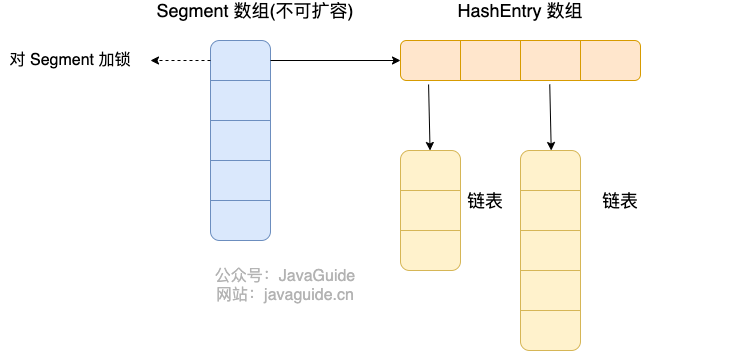
Java 7 中 ConcurrentHashMap 的存储结构如上图,ConcurrnetHashMap 由很多个 Segment 组合,而每一个 Segment 是一个类似于 HashMap 的结构,所以每一个 HashMap 的内部可以进行扩容。但是 Segment 的个数一旦初始化就不能改变,默认 Segment 的个数是 16 个,你也可以认为 ConcurrentHashMap 默认支持最多 16 个线程并发,每次加锁都只会对 Segment 进行加锁,也就是分段锁
2. ConcurrentHashMap 1.8
- 数据结构改进:与 HashMap 一样,将原先
数组+单链表的数据结构,变更为数组+单链表+红黑树的结构。当出现哈希冲突时,数据会存入数组指定桶的单链表,当链表长度达到 8,则将其转换为红黑树结构,这样其查询的时间复杂度可以降低到 $$O(logN)$$,以改进性能。 - 并发机制改进:
- 取消
segments字段,直接采用transient volatile HashEntry<K,V>[] table保存数据,采用table数组元素作为锁,从而实现了对每一行数据进行加锁,进一步减少并发冲突的概率。 - 使用
CAS + sychronized操作,在特定场景进行无锁并发操作。使用Unsafe、LongAdder之类底层手段,进行极端情况的优化。现代 JDK 中,synchronized已经被不断优化,可以不再过分担心性能差异,另外,相比于ReentrantLock,它可以减少内存消耗,这是个非常大的优势。
- 取消
重要属性和内部类
1
2
3
4
5
6
7
8
9
10
11
12
13
14
15
16
17
18
19
// 默认为 0
// 当初始化时, 为 -1
// 当扩容时, 为 -(1 + 扩容线程数)
// 当初始化或扩容完成后,为 下一次的扩容的阈值大小
private transient volatile int sizeCtl;
// 整个 ConcurrentHashMap 就是一个 Node[]
static class Node<K,V> implements Map.Entry<K,V> {}
// hash 表
transient volatile Node<K,V>[] table;
// 扩容时的 新 hash 表
private transient volatile Node<K,V>[] nextTable;
// 扩容时如果某个 bin 迁移完毕, 用 ForwardingNode 作为旧 table bin 的头结点
static final class ForwardingNode<K,V> extends Node<K,V> {}
// 用在 compute 以及 computeIfAbsent 时, 用来占位, 计算完成后替换为普通 Node
static final class ReservationNode<K,V> extends Node<K,V> {}
// 作为 treebin 的头节点, 存储 root 和 first
static final class TreeBin<K,V> extends Node<K,V> {}
// 作为 treebin 的节点, 存储 parent, left, right
static final class TreeNode<K,V> extends Node<K,V> {}
重要方法
1
2
3
4
5
6
7
8
// 获取 Node[] 中第 i 个 Node
static final <K,V> Node<K,V> tabAt(Node<K,V>[] tab, int i)

// cas 修改 Node[] 中第 i 个 Node 的值, c 为旧值, v 为新值
static final <K,V> boolean casTabAt(Node<K,V>[] tab, int i, Node<K,V> c, Node<K,V> v)

// 直接修改 Node[] 中第 i 个 Node 的值, v 为新值
static final <K,V> void setTabAt(Node<K,V>[] tab, int i, Node<K,V> v)
构造方法
1
2
3
4
5
6
7
8
9
10
11
public ConcurrentHashMap(int initialCapacity, float loadFactor, int concurrencyLevel) {
    if (!(loadFactor > 0.0f) || initialCapacity < 0 || concurrencyLevel <= 0)
        throw new IllegalArgumentException();
    if (initialCapacity < concurrencyLevel) // Use at least as many bins
        initialCapacity = concurrencyLevel; // as estimated threads
    long size = (long)(1.0 + (long)initialCapacity / loadFactor);
    // tableSizeFor 仍然是保证计算的大小是 2^n, 即 16,32,64 ...
    int cap = (size >= (long)MAXIMUM_CAPACITY) ?
        MAXIMUM_CAPACITY : tableSizeFor((int)size);
    this.sizeCtl = cap;
}
可以看到实现了懒惰初始化,在构造方法中仅仅计算了 table 的大小,以后在第一次使用时才会真正创建
put
以下数组简称(table),链表简称(bin)
1
2
3
4
5
6
7
8
9
10
11
12
13
14
15
16
17
18
19
20
21
22
23
24
25
26
27
28
29
30
31
32
33
34
35
36
37
38
39
40
41
42
43
44
45
46
47
48
49
50
51
52
53
54
55
56
57
58
59
60
61
62
63
64
65
66
67
68
69
70
71
72
73
74
75
76
77
78
79
80
81
82
83
84
85
86
87
88
89
90
91
92
93
94
95
96
97
98
99
100
101
102
103
104
105
106
107
108
109
110
111
112
113
114
115
116
117
118
119
120
121
122
123
124
125
126
127
128
129
130
131
132
133
134
135
136
137
138
139
140
141
142
143
144
145
146
147
148
149
150
151
152
153
154
155
156
157
158
159
160
161
162
public V put(K key, V value) {
    return putVal(key, value, false);
}
final V putVal(K key, V value, boolean onlyIfAbsent) {
    if (key == null || value == null) throw new NullPointerException();
    // 其中 spread 方法会综合高位低位, 具有更好的 hash 性
    int hash = spread(key.hashCode());
    int binCount = 0;
    for (Node<K,V>[] tab = table;;) {
        // f 是链表头节点
        // fh 是链表头结点的 hash
        // i 是链表在 table 中的下标
        Node<K,V> f; int n, i, fh;
        // 要创建 table
        if (tab == null || (n = tab.length) == 0)
            // 初始化 table 使用了 cas, 无需 synchronized 创建成功, 进入下一轮循环
            tab = initTable();
        // 要创建链表头节点
        else if ((f = tabAt(tab, i = (n - 1) & hash)) == null) {
            // 添加链表头使用了 cas, 无需 synchronized
            if (casTabAt(tab, i, null,
                         new Node<K,V>(hash, key, value, null)))
                break;
        }
        // 帮忙扩容
        else if ((fh = f.hash) == MOVED)
            // 帮忙之后, 进入下一轮循环
            tab = helpTransfer(tab, f);
        else {
            V oldVal = null;
            // 锁住链表头节点
            synchronized (f) {
                // 再次确认链表头节点没有被移动
                if (tabAt(tab, i) == f) {
                    // 链表
                    if (fh >= 0) {
                        binCount = 1;
                        // 遍历链表
                        for (Node<K,V> e = f;; ++binCount) {
                            K ek;
                            // 找到相同的 key
                            if (e.hash == hash &&
                                ((ek = e.key) == key ||
                                 (ek != null && key.equals(ek)))) {
                                oldVal = e.val;
                                // 更新
                                if (!onlyIfAbsent)
                                    e.val = value;
                                break;
                            }
                            Node<K,V> pred = e;
                            // 已经是最后的节点了, 新增 Node, 追加至链表尾
                            if ((e = e.next) == null) {
                                pred.next = new Node<K,V>(hash, key,
                                                          value, null);
                                break;
                            }
                        }
                    }
                    // 红黑树
                    else if (f instanceof TreeBin) {
                        Node<K,V> p;
                        binCount = 2;
                        // putTreeVal 会看 key 是否已经在树中, 是, 则返回对应的 TreeNode
                        if ((p = ((TreeBin<K,V>)f).putTreeVal(hash, key,
                                                              value)) != null) {
                            oldVal = p.val;
                            if (!onlyIfAbsent)
                                p.val = value;
                        }
                    }
                }
                // 释放链表头节点的锁
            }

            if (binCount != 0) {
                if (binCount >= TREEIFY_THRESHOLD)
                    // 如果链表长度 >= 树化阈值(8), 进行链表转为红黑树
                    treeifyBin(tab, i);
                if (oldVal != null)
                    return oldVal;
                break;
            }
        }
    }
    // 增加 size 计数
    addCount(1L, binCount);
    return null;
}
private final Node<K,V>[] initTable() {
    Node<K,V>[] tab; int sc;
    while ((tab = table) == null || tab.length == 0) {
        if ((sc = sizeCtl) < 0)
            Thread.yield();
        // 尝试将 sizeCtl 设置为 -1(表示初始化 table)
        else if (U.compareAndSwapInt(this, SIZECTL, sc, -1)) {
            // 获得锁, 创建 table, 这时其它线程会在 while() 循环中 yield 直至 table 创建
            try {
                if ((tab = table) == null || tab.length == 0) {
                    int n = (sc > 0) ? sc : DEFAULT_CAPACITY;
                    Node<K,V>[] nt = (Node<K,V>[])new Node<?,?>[n];
                    table = tab = nt;
                    sc = n - (n >>> 2);
                }
            } finally {
                sizeCtl = sc;
            }
            break;
        }
    }
    return tab;
}
// check 是之前 binCount 的个数
private final void addCount(long x, int check) {
    CounterCell[] as; long b, s;
    if (
        // 已经有了 counterCells, 向 cell 累加
        (as = counterCells) != null ||
        // 还没有, 向 baseCount 累加
        !U.compareAndSwapLong(this, BASECOUNT, b = baseCount, s = b + x)
    ) {
        CounterCell a; long v; int m;
        boolean uncontended = true;
        if (
            // 还没有 counterCells
            as == null || (m = as.length - 1) < 0 ||
            // 还没有 cell
            (a = as[ThreadLocalRandom.getProbe() & m]) == null ||
            // cell cas 增加计数失败
            !(uncontended = U.compareAndSwapLong(a, CELLVALUE, v = a.value, v + x))
        ) {
            // 创建累加单元数组和cell, 累加重试
            fullAddCount(x, uncontended);
            return;
        }
        if (check <= 1)
            return;
        // 获取元素个数
        s = sumCount();
    }
    if (check >= 0) {
        Node<K,V>[] tab, nt; int n, sc;
        while (s >= (long)(sc = sizeCtl) && (tab = table) != null &&
               (n = tab.length) < MAXIMUM_CAPACITY) {
            int rs = resizeStamp(n);
            if (sc < 0) {
                if ((sc >>> RESIZE_STAMP_SHIFT) != rs || sc == rs + 1 ||
                    sc == rs + MAX_RESIZERS || (nt = nextTable) == null ||
                    transferIndex <= 0)
                    break;
                // newtable 已经创建了,帮忙扩容
                if (U.compareAndSwapInt(this, SIZECTL, sc, sc + 1))
                    transfer(tab, nt);
            }
            // 需要扩容,这时 newtable 未创建
            else if (U.compareAndSwapInt(this, SIZECTL, sc,
                                         (rs << RESIZE_STAMP_SHIFT) + 2))
                transfer(tab, null);
            s = sumCount();
        }
    }
}
可以看到ConcurrentHashMap不允许key和value为null
通过int hash = spread(key.hashCode());来计算 hash 值,其保证了 hash 值是正数
初始化则是通过initTable()
1
2
3
4
5
6
7
8
9
10
11
12
13
14
15
16
17
18
19
20
21
22
23
24
25
26
27
/**
 * Initializes table, using the size recorded in sizeCtl.
 */
private final Node<K,V>[] initTable() {
    Node<K,V>[] tab; int sc;
    while ((tab = table) == null || tab.length == 0) {
        // 如果 sizeCtl < 0 ,说明另外的线程执行CAS 成功,正在进行初始化。
        if ((sc = sizeCtl) < 0)
            // 让出 CPU 使用权
            Thread.yield(); // lost initialization race; just spin
        else if (U.compareAndSwapInt(this, SIZECTL, sc, -1)) {
            try {
                if ((tab = table) == null || tab.length == 0) {
                    int n = (sc > 0) ? sc : DEFAULT_CAPACITY;
                    @SuppressWarnings("unchecked")
                    Node<K,V>[] nt = (Node<K,V>[])new Node<?,?>[n];
                    table = tab = nt;
                    sc = n - (n >>> 2);
                }
            } finally {
                sizeCtl = sc;
            }
            break;
        }
    }
    return tab;
}- 因为 sizeCtl 小于 0 说明已经有线程在进行初始化了,所以
Thread.yield()让出 CPU 使用权,否则使用 cas 尝试将 sizeCtl 设为-1 - 如果 sizeCtl 大于 0,说明用户指定了容量,所以
int n = (sc > 0) ? sc : DEFAULT_CAPACITY(16); - 扩容完成后将 sc 设为 n 的 3/4,表示下一次的扩容的阈值大小并赋给 sizeCtl
总结:
- 进入 for 循环:
- if table 为 null 或者长度 为 0
- 初始化表
- else if 索引处无节点
- 创建节点,通过 cas 填入 key 和 value,放入 table,退出循环
- else if 索引处节点的 hash 值为 MOVE(ForwardingNode,即-1),表示正在扩容和迁移
- 帮忙
- else
- 锁住头节点
- if 再次确认头节点没有被移动
- if 头节点 hash 值大于 0(表示这是一个链表)
- 遍历链表找到对应 key,如果没有,创建。
- else if 节点为红黑树节点
- 调用
putTreeVal查看是否有对应 key 的树节点- 如果有且为覆盖模式,将值覆盖,返回旧值
- 如果没有,创建并插入,返回 null
- 调用
- if 头节点 hash 值大于 0(表示这是一个链表)
- 解锁
- if 再次确认头节点没有被移动
- if binCount 不为 0
- 如果 binCount 大于树化阈值 8
- 树化
- 如果旧值不为 null
- 返回旧值
- break
- 如果 binCount 大于树化阈值 8
- 锁住头节点
- if table 为 null 或者长度 为 0
- 增加 size 计数
- return null
get
1
2
3
4
5
6
7
8
9
10
11
12
13
14
15
16
17
18
19
20
21
22
23
24
public V get(Object key) {
    Node<K,V>[] tab; Node<K,V> e, p; int n, eh; K ek;
    // key 所在的 hash 位置
    int h = spread(key.hashCode());
    if ((tab = table) != null && (n = tab.length) > 0 &&
        (e = tabAt(tab, (n - 1) & h)) != null) {
        // 如果指定位置元素存在,头结点hash值相同
        if ((eh = e.hash) == h) {
            if ((ek = e.key) == key || (ek != null && key.equals(ek)))
                // key hash 值相等,key值相同,直接返回元素 value
                return e.val;
        }
        else if (eh < 0)
            // 头结点hash值小于0,说明正在扩容或者是红黑树,find查找
            return (p = e.find(h, key)) != null ? p.val : null;
        while ((e = e.next) != null) {
            // 是链表,遍历查找
            if (e.hash == h &&
                ((ek = e.key) == key || (ek != null && key.equals(ek))))
                return e.val;
        }
    }
    return null;
}- 根据 hash 值计算位置。
- 查找到指定位置,如果头节点就是要找的,直接返回它的 value.
- 如果头节点 hash 值小于 0 ,说明正在扩容或者是红黑树,查找之。
- 如果是链表,遍历查找之。
本博客所有文章除特别声明外,均采用 CC BY-NC-SA 4.0 许可协议。转载请注明来源 米奇妙妙屋!
相关推荐

2024-06-09
AQS原理
借助 ReentrantLock 来解释。 1. AQS概念AQS是JUC提供的一个用于构建锁和同步容器的基础类。JUC包内的许多类都是基于AQS构建,例如ReentrantLock、 Semaphore、CountDownLatch、ReentrantReadWriteLock、FutureTask等。AQS解决了在实现同步容器时设计的大 量细节问题。 AQS是CLH队列的一个变种,主要原理和CLH队列差不多,这也是前面对CLH队列进行长篇大论介绍的原因。AQS队列 内部维护的是一个FIFO的双向链表,这种结构的特点是每个数据结构都有两个指针,分别指向直接的前驱节点和直接 的后驱节点。所以双向链表可以从任意一个节点开始很方便地访问前驱节点和后驱节点。每个节点其实是由线程封装 的,当线程争抢锁失败后会封装成Node加入到AQS队列中去;当获取锁的线程释放锁以后,会从队列中唤醒一个阻塞 的节点(线程)。 1.1 ...

2024-06-14
HashMap部分源码
HashMap构造方法12345678910111213141516171819202122232425262728// 默认构造函数。 public HashMap() { this.loadFactor = DEFAULT_LOAD_FACTOR; // all other fields defaulted } // 包含另一个“Map”的构造函数 public HashMap(Map<? extends K, ? extends V> m) { this.loadFactor = DEFAULT_LOAD_FACTOR; putMapEntries(m, false);//下面会分析到这个方法 } // 指定“容量大小”的构造函数 public HashMap(int initialCapacity) { this(initialCapacity, DEFAULT_LOAD_FACTOR); } // 指定“容量大小”和“负载因子”的构造函数 public HashMap(int...

2024-06-12
ThreadLocal源码
数据结构ThreadLocalMap 是 ThreadLocal 的静态内部类,它内部维护了一个 Entry 数组,key 是 ThreadLocal 对象,value 是线程的局部变量本身。 123456789static class Entry extends WeakReference<ThreadLocal<?>> { /** The value associated with this ThreadLocal. */ Object value; Entry(ThreadLocal<?> k, Object v) { super(k); value = v; } } 可以看到,这里的 Entry 继承了 WeakReference,它限定了 key 是一个弱引用,弱引用的好处是当内存不足时,JVM 会回收 ThreadLocal 对象,并且将其对应的 Entry 的 value 设置为 null,这样在很大程度上可以避免内存泄漏。 弱引用需要用...

2024-05-08
synchronized原理
64 位虚拟机 Mark Word(java 对象头) 从上到下依次是普通状态、偏向锁、轻量级锁、重量级锁 Monitor 被翻译为监视器或管程每个对象实例都会有一个 Monitor,Monitor 可以和对象一起创建、销毁。Monitor 是由 ObjectMonitor 实现,而 ObjectMonitor 是由 C++ 的 ObjectMonitor.hpp 文件实现。 当多个线程同时访问一段同步代码时,多个线程会先被存放在 EntryList 集合中,处于 block 状态的线程,都会被加入到该列表。接下来当线程获取到对象的 Monitor 时,Monitor 是依靠底层操作系统的 Mutex Lock 来实现互斥的,线程申请 Mutex 成功,则持有该 Mutex,其它线程将无法获取到该 Mutex。 如果线程调用 wait() 方法,就会释放当前持有的 Mutex,并且该线程会进入 WaitSet 集合中,等待下一次被唤醒。如果当前线程顺利执行完方法,也将释放 Mutex。每个 Java 对象都可以关联一个 Monitor 对象,如果使用 synchronized...
2024-07-01
线程池原理
什么是线程池说白了就是一个线程集合 workerSet 和一个阻塞队列 workQueue。当用户向线程池提交一个任务(也就是线程)时,线程池会先将任务放入 workQueue 中。workerSet 中的线程会不断的从 workQueue 中获取线程然后执行。当 workQueue 中没有任务的时候,worker 就会阻塞,直到队列中有任务了就取出来继续执行。 创建线程池1. 通过 Executor 框架的工具类 Executors 来创建。有很多内置的线程池,包括: FixedThreadPool:固定线程数量的线程池。该线程池中的线程数量始终不变。当有一个新的任务提交时,线程池中若有空闲线程,则立即执行。若没有,则新的任务会被暂存在一个任务队列中,待有线程空闲时,便处理在任务队列中的任务。 SingleThreadExecutor: 只有一个线程的线程池。若多余一个任务被提交到该线程池,任务会被保存在一个任务队列中,待线程空闲,按先入先出的顺序执行队列中的任务。 CachedThreadPool:...
评论